Building a home in Nepal is often the dream of a lifetime. From the foundation to the final coat of paint, every choice is personal and permanent. But few decisions will impact your daily life as much as the floor beneath your feet.
It’s not just about aesthetics. In Nepal, your floor has to battle a unique set of challenges: the monsoon’s damp humidity, the bitter winter cold (especially in Kathmandu and the hills), persistent dust, and even the unfortunate reality of seismic activity.
Choosing among the three main contenders —Tiles, Marble, and Wood —can be overwhelming. This guide cuts through the noise to give you a deep analysis tailored for the Nepali homeowner.
The Contender: Tiles (Ceramic, Porcelain & Vitrified)
The All-Rounder & Popular Champion
Walk into any modern home in Nepal, and you’ll likely find tiles. They are the practical, versatile, and most popular choice for a reason.
- Ceramic Tiles: Made from clay and fired, they are the most affordable option. Best for walls or low-traffic areas.
- Porcelain & Vitrified (GVT/PGVT): Fired at much higher temperatures, these are harder, denser, and less porous than ceramic. They are the standard for floor use today, being highly durable and water-resistant.
The Pros:
- Affordability: Tiles offer the widest range of options, starting from very budget-friendly (NPR 75/sq. ft.) to premium.
- Durability & Water-Resistance: Porcelain and vitrified tiles are almost completely waterproof. This makes them the perfect choice for Nepal’s monsoon-affected climate, as well as for kitchens and bathrooms.
- Endless Variety: From matte finishes to glossy, wood-look to stone-look, the design possibilities are infinite.
- Low Maintenance: They don’t trap dust (a huge plus for dusty cities like Kathmandu) and can be easily wet-mopped. They are non-porous and don’t stain easily.
The Cons:
- The “Winter Cold”: This is the number one complaint in Nepal. Tile and marble floors become ice-cold in winter, making your home feel significantly colder and requiring thick rugs or chyappals at all times.
- Grout Lines: The space between tiles is filled with grout, which is porous and absorbs dirt. Over time, it can look- grimy and is difficult to clean.
- Cracking Risk: While durable, a heavy object dropped on a tile can chip or crack it. Poor installation or a concrete sub-floor that settles can also lead to cracks.
- Earthquake Risk: Being rigid and brittle, tiles (and their grout lines) are susceptible to cracking during a significant earthquake.
Deep-Dive | Cost in Nepal (Approx.): - Standard Ceramic/Vitrified: NPR 75 – NPR 300 per sq. ft.
- Premium/Large Format: Can go up to NPR 400+ per sq. ft.
- Installation: NPR 20 – NPR 35 per sq. ft.
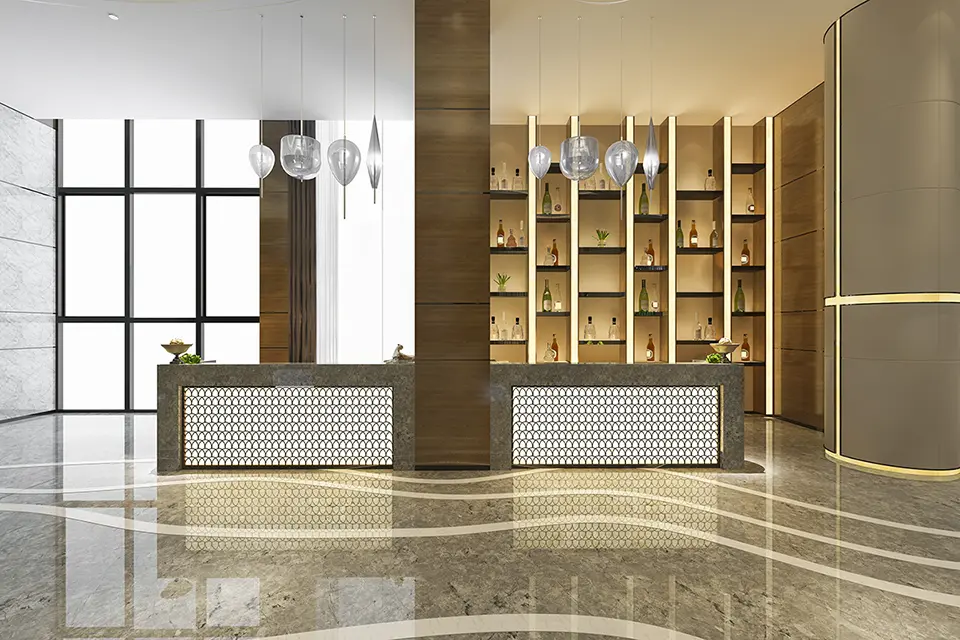
The Contender: Marble
The Symbol of Classic Elegance
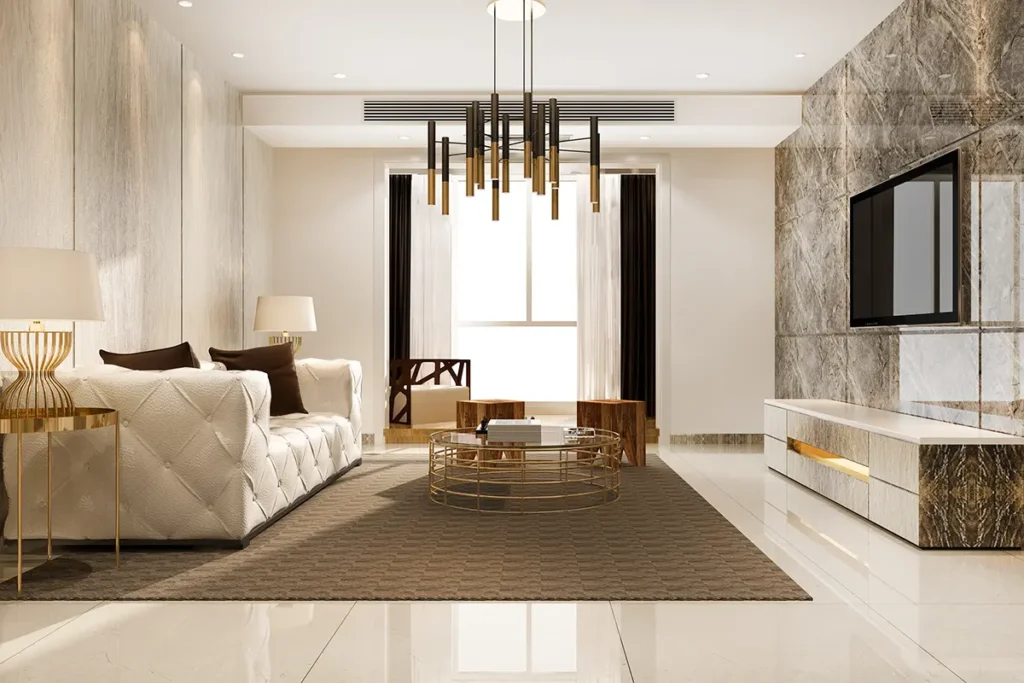
For generations, marble has been the benchmark for luxury in Nepali homes. From the bhet-kotha (living/guest room) of a traditional home to a modern villa, marble makes a statement of prestige.
The Pros:
- Unmatched Aesthetics: Each slab is unique. The natural veining and high-gloss polish provide a look of opulence that tiles can only imitate.
- Natural & Timeless: Marble has been used for centuries and never goes out of style.
- Cooling Effect: In the hot, humid summers of the Terai, a marble floor is a blessing, as it stays naturally cool to the touch.
The Cons:
- The Coldest Option: Even colder than tiles, marble floors are notoriously frigid in winter.
- Extremely High Maintenance: Marble is a porous rock. This is its biggest weakness.
- Staining: A drop of tea, haldi (turmeric), or ghee can cause a permanent stain if not wiped up immediately.
- Polishing: It loses its shine over time, especially in dusty environments. It requires professional grinding and polishing every few years, which is an expensive, messy process.
- High Cost: Both the material (especially imported or large slabs) and the skilled labor required for installation are expensive.
- Prone to Cracking: Like tiles, marble is brittle. Its weight and rigidity also make it vulnerable to cracking during seismic events.
Deep-Dive | Cost in Nepal (Approx.):
- Basic Marble Tiles/Local Stone: NPR 150 – NPR 400 per sq. ft.
- Premium/Imported Slabs: NPR 450 – NPR 1,500+ per sq. ft.
- Installation & Polishing: Significantly higher than tiles.
The Contender: Wood (Laminate, Engineered & Solid)
The Source of Warmth & Comfort
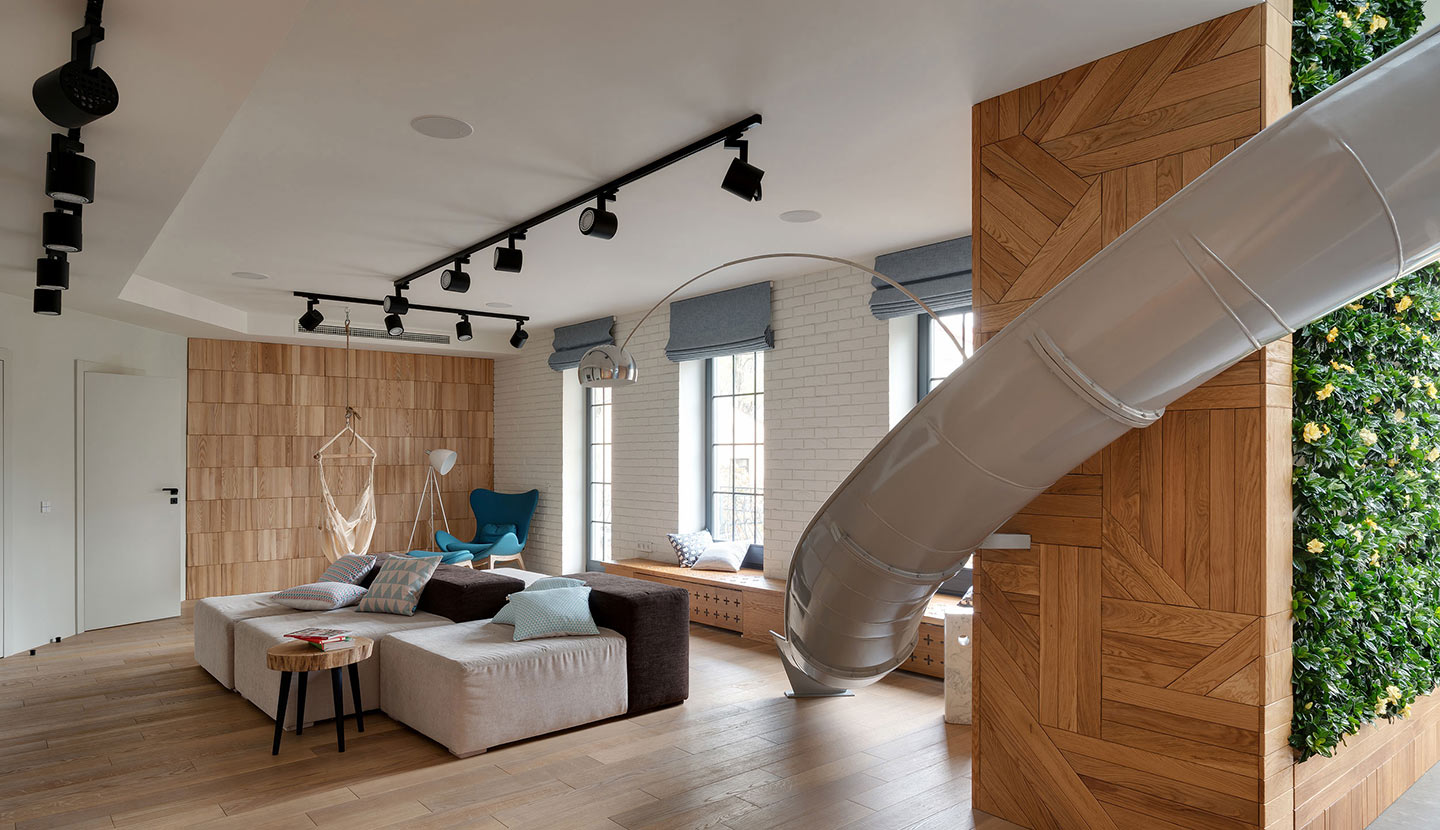
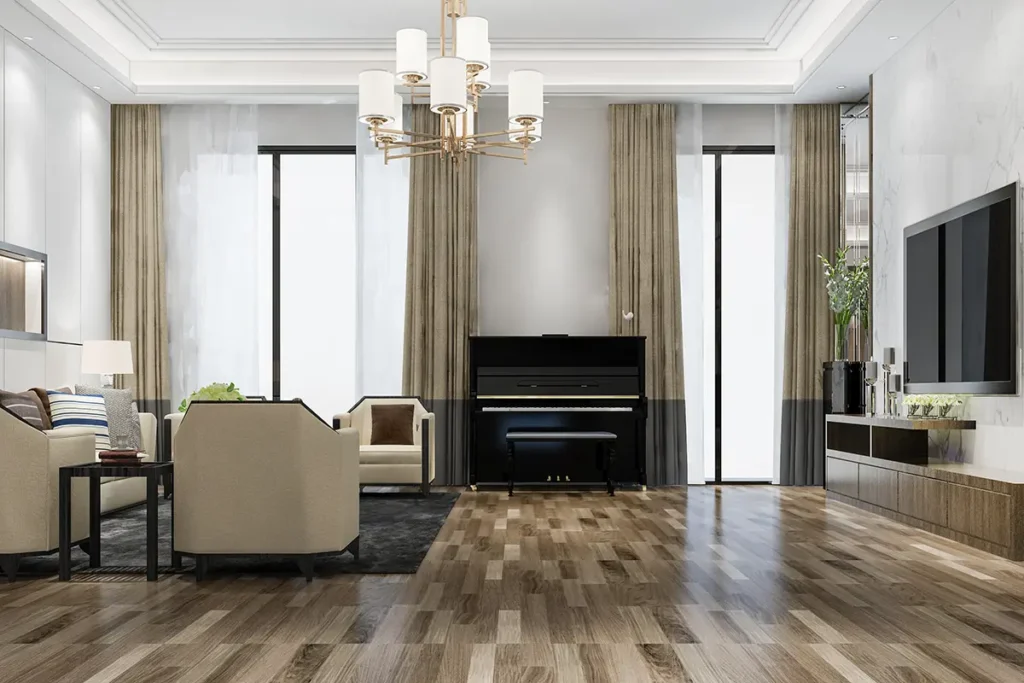
Wooden flooring has surged in popularity, especially in colder cities like Kathmandu and Pokhara, as a direct solution to the “cold floor” problem.
It’s crucial to understand the types:
- Laminate (HDF): This is the most common “wooden flooring” in Nepal. It’s not real wood. It’s a high-density fiberboard (HDF) base with a high-resolution photo of wood on top, protected by a clear wear layer.
- Engineered Wood: A middle-ground. It has a real wood “veneer” on top, bonded to layers of plywood. It looks like real wood but is more stable.
- Solid Hardwood (Parquet): The real deal. Thick planks of 100% real wood. It is the most beautiful, most expensive, and most problematic.
The Pros:
- The #1 Pro: Warmth: Wood is a natural insulator. It feels warm and comfortable underfoot, even in the dead of winter. This is its single greatest advantage.
- Aesthetic Appeal: It adds a “cozy,” sophisticated, and modern feel to bedrooms and living rooms.
- Seismic Resilience: A “floating” laminate floor (one that isn’t glued down) has some flexibility. It is far less likely to crack or show damage from an earthquake compared to tile or marble.
The Cons:
- The #1 Con: Water & Humidity: Wood’s greatest enemy is water. This is a major problem for Nepal.
- Monsoon Humidity: The high humidity during the monsoon can cause wood (especially solid and cheap laminate) to absorb moisture and expand, leading to buckling, peaking, and warping.
- Spills: Any standing water can seep into the joints and permanently damage the board.
- Scratches: The surface can be scratched by furniture, pet claws, or even grit.
- Noise: Can be noisy to walk on (a “click-clack” sound), especially cheaper laminates.
- Termites: Solid wood is a food source for termites, a common problem in Nepal.
Deep-Dive | Cost in Nepal (Approx.):
- Laminate (HDF 8mm-12mm): NPR 120 – NPR 300 per sq. ft. (The most popular segment)
- Engineered/Solid Wood: NPR 300 – NPR 1,200+ per sq. ft.
- Installation: Often included or around NPR 25-40/sq. ft.
The Nepal Factor: Head-to-Head Comparison
Let’s summarize the “deep research” in a table built for a Nepali homeowner.
| Feature | Tiles (Porcelain/Vitrified) | Marble | Wood (Laminate) |
| Winter Comfort (Warmth) | Very Poor (Cold) | Poorest (Ice Cold) | Excellent (Warm) |
| Monsoon (Humidity) Resistance | Excellent (Waterproof) | Good (Can stain) | Poor (Prone to buckling/warping) |
| Maintenance (Dust & Stains) | Excellent (Easy to clean) | Poor (Stains easily, needs polishing) | Good (Easy to sweep, but can scratch) |
| Durability | Excellent (Hard, long-lasting) | Good (Long-lasting, but brittle) | Good (Wear layer lasts, but can scratch) |
| Affordability | Excellent | Poor (Premium) | Good (Mid-Range) |
| Earthquake Resilience | Poor (Brittle, can crack) | Poor (Heavy & Brittle) | Good (More flexible) |
The Final Verdict: What’s Right for Your Home?
There is no single “best” floor. The best choice is a combination that fits your lifestyle, location, and budget.
Scenario 1: You live in the Terai (e.g., Biratnagar, Butwal).
- Winner: Tiles or Marble.
- Reasoning: The cooling effect of tile and marble is a significant advantage in the intense heat. Winter cold is less of a concern. The waterproof nature of tiles is also perfect for the high humidity.
Scenario 2: You live in the Hills (e.g., Kathmandu, Pokhara) and HATE cold floors.
- Winner: Laminate Wood.
- Reasoning: Prioritize wood for bedrooms and living areas. The warmth and comfort in winter will change your quality of life. Accept that you must be careful with water spills.
Scenario 3: You are on a strict budget.
- Winner: Tiles.
- Reasoning: Tiles offer the best durability, longevity, and ease of maintenance for the price. You can’t go wrong. Invest in good rugs for the winter.
Scenario 4: You want a luxury “wow” factor for your bhet-kotha.
- Winner: Marble (if you have a maintenance budget) or High-End Solid Wood.
- Reasoning: If you are willing to pay for the prestige and the upkeep (polishing), nothing beats the statement of real marble. Solid wood parquet is a close second.
The Smartest Choice: The “Hybrid” Home
This is the most practical and popular solution in modern Nepal:
- Tiles: Use in high-traffic and wet areas (kitchen, bathrooms, hallways, ground floor).
- Laminate Wood: Use in private, “cozy” spaces (bedrooms, family lounge).
This gives you the best of all worlds: the durability and water-resistance of tile where you need it, and the warmth of wood where you want it.